Key points
- Ozempic and Wegovy have the same substance, semaglutide. Mounjaro and Zepbound have tirzepatide, and each trade name has different uses approved by the FDA.1,2,3,4
- Many insurance plans approve weight loss medications if the BMI is 30 or more, or 27 with a weight-related health problem, and renew approval when the patient loses at least 5% of their weight.28,29,30
- Medicare Part D still does not cover weight loss medications, but since July 1, 2026, the Medicare GLP-1 Bridge program covers some of them for $50 per month.39,42
Ozempic, Wegovy, Mounjaro and Zepbound became household names within a few years. But the truth is that these four names belong to only two drugs: Ozempic and Wegovy include the active ingredient semaglutide from Novo Nordisk, and Mounjaro and Zepbound include the active ingredient tirzepatide from Eli Lilly.1,2,3,4 Okay, why would an insurance plan approve one name and reject another name for the same person? The answer is on the FDA label: each trade name is approved for different uses, and the insurance plan covers the drug depending on the intended use.5
What are GLP-1 medications and how do they work?
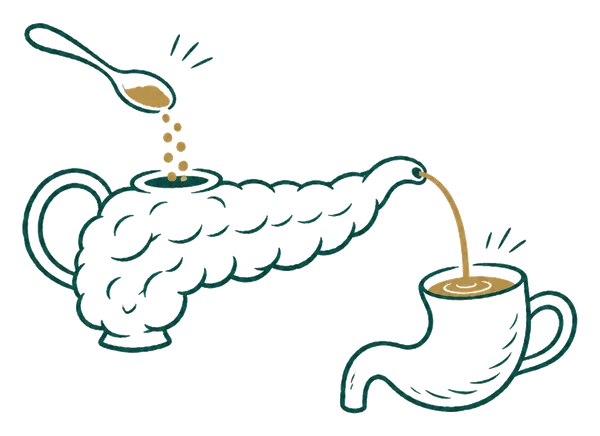
Have you ever noticed that you feel full for a long time after a big meal? Part of this sensation is caused by the hormone GLP-1 (glucagon-like peptide-1).6 Cells in the intestinal lining release this hormone when a person eats.6 This hormone causes the pancreas to secrete more insulin and less glucagon (a hormone that raises blood sugar), and also slows stomach emptying and reduces the amount of food eaten.7
The problem is that the half-life (the time it takes for half of it to be gone) of the natural hormone in the blood is only about 1 to 2 minutes, because the enzyme DPP-4 breaks it down and the kidneys excrete it from the body.8 This is why these drugs are manufactured versions that last much longer, and their scientific name is GLP-1 receptor agonists.2,1 Tirzepatide also activates the receptor of another hormone, called GIP (glucose-dependent insulinotropic polypeptide).4
Wegovy, Ozempic, Zepbound and Mounjaro: what is each drug approved for?
Ozempic
In December 2017, the FDA approved Novo Nordisk's Ozempic for blood sugar control in adults with type 2 diabetes.9 The FDA has since approved two additional uses for the same patients: reducing the risk of heart attack, stroke, and death from cardiovascular disease in those with cardiovascular disease,10 and reducing the risk of kidney failure in those with chronic kidney disease.11
Wegovy
Wegovy is the same semaglutide at a higher dose.12 In June 2021, the FDA approved Wegovy for the long-term treatment of excess weight in adults with a body mass index (BMI) of 30 or higher, or 27 or higher and at least one weight-related medical condition, such as high blood pressure or high cholesterol.13 In December 2022, the FDA approval was extended to children 12 years old and over.14 In March 2024, the FDA approved Wegovy to reduce the risk of death from cardiovascular disease, heart attack, and stroke in adults with cardiovascular disease who are obese or overweight.15 In August 2025, the FDA approved Wegovy for MASH, a fatty liver disease, in adults with moderate to advanced scarring of the liver and no cirrhosis.16
Mounjaro
Mounjaro is Eli Lilly's tirzepatide.3 In May 2022, the FDA approved Mounjaro for adults with type 2 diabetes, and the FDA said then that Mounjaro was the first drug to activate the GLP-1 and GIP receptors together.17 In August 2026, the FDA approved a new use for Mounjaro: reducing the risk of heart attack, stroke, and death from cardiovascular disease in patients with type 2 diabetes at high risk.18
Zepbound
Zepbound is the same tirzepatide but with a different brand name.12 In November 2023, the FDA approved Zepbound for weight management with the same BMI limits as Wegovy.19 In December 2024, the FDA approved Zepbound as the first drug to treat moderate to severe obstructive sleep apnea (breathing that stops again and again during sleep) in obese adults.20 In April 2026, the FDA approved Foundayo (orforglipron), an Eli Lilly daily pill for weight management.21
What is the difference between Ozempic and Wegovy, and between Mounjaro and Zepbound?
Ozempic and Wegovy have the same substance.12 Okay, what's different? Dosage and label. The highest dose for Ozempic is 2 mg per week,1 but the usual dose for Wegovy is 2.4 mg, and for weight loss in adults this dose can be as high as 7.2 mg.2 Mounjaro and Zepbound are even closer: the same substance and the same highest dose, 15 mg.3,4 The label is what sets them apart. The Cigna policy, for example, states that Wegovy contains the same substance as Ozempic and Zepbound contains the same substance as Mounjaro, and that the diabetes versions are not FDA-approved for weight loss in people without type 2 diabetes.12
The two active ingredients themselves are different, because tirzepatide also activates GIP.4 In the SURMOUNT-5 study, researchers compared the two drugs to each other in 751 obese adults without diabetes. After 72 weeks, the average weight loss was 20.2% for tirzepatide compared to 13.7% for semaglutide.22
What are the common side effects of GLP-1 medications?
There are people who develop stomach and intestinal symptoms while taking GLP-1 medications. The most common symptoms listed on the Ozempic label are nausea, vomiting, diarrhea, abdominal pain and constipation.1 When you start taking a medication, your doctor will usually start you with a small dose.2,4 With Wegovy, the first dose is 0.25 mg per week for 4 weeks, and the label states that the steps to increase the dose are there "to reduce the risk of gastrointestinal adverse reactions."2
All four drugs have a boxed warning (a warning in a box at the top of the label), and the Wegovy label says: "In rodents, semaglutide causes thyroid C-cell tumors at clinically relevant exposures."2 No one yet knows if this happens to people, so these drugs are contraindicated (not to be used) for anyone who has, or has a family history of, medullary thyroid cancer (MTC), or who has MEN 2 (a rare inherited syndrome).1,2,3,4
Why do health plans and PBMs require prior authorization for GLP-1 drugs?
A prior authorization is an insurance plan's approval that may be required before a prescription is filled in order for the plan to cover the drug.23 For drugs, this review is often conducted by a PBM (pharmacy benefit manager), which is the intermediary that negotiates with drug companies and compiles the formulary, the list of drugs that the plan covers.24
Okay, why do insurance plans require approval for GLP-1 drugs? To save money, of course. The list price of Wegovy is $1,349.02 per package.25 And KFF (a health policy research group) wrote that "Gross Medicare Part D spending on GLP-1s in 2024 (not accounting for rebates) totaled $27.5 billion, a five-fold increase from 2019."26
Medicare's drug coverage guide puts it this way: "Plans may also use prior authorization when they only cover a drug for some medical conditions it's approved for, but not others."5 A study published in 2026 found that 13.8% of people who started semaglutide or tirzepatide in Medicare Part D (Medicare's drug coverage) in 2023 had no signs of diabetes.27 The researchers wrote that "Part D plans with utilization management requirements, such as prior authorization or step therapy, were associated with a lower likelihood of GLP-1 initiation without documented evidence of diabetes."27 (Step therapy means trying a cheaper drug first.)5
What do reviewers check for in a prior authorization request for GLP-1 drugs?

When the FDA approved Wegovy in 2021, the FDA wrote: "The drug is indicated for chronic weight management in patients with a body mass index (BMI) of 27 kg/m2 or greater who have at least one weight-related ailment or in patients with a BMI of 30 kg/m2 or greater."13 The Cigna, Aetna, UnitedHealthcare and Prime Therapeutics policies still use the same numbers.28,29,30,31
The BMI should be the one from before the start of treatment, that is, before the first GLP-1 drug the patient took, and this is what the Cigna policy requires.28 A doctor who specializes in treating obesity at Massachusetts General Hospital said in 2022: "I've had patients doing well on medication and their BMI gets below a certain level, and then the insurance company wants to take them off the medication."32
North Carolina's Medicaid program clearly stated the condition: "Prescriber must provide the patient's baseline weight and BMI, to be documented on the PA form, as measured within the past 45 days of the submitted PA."33 Cigna's policy asks whether the "Patient has engaged in a trial of behavioral modification and dietary restriction for at least 3 months."28 For Ozempic or Mounjaro, the reviewer is looking for type 2 diabetes in the medical record, for example, an A1C (a blood test of average blood sugar) result of 6.5% or more in the UnitedHealthcare policy.34
To renew approval, Aetna's policy requires that "The patient has lost at least 5 percent of baseline body weight OR the patient has continued to maintain their initial 5 percent weight loss."29 Cigna and UnitedHealthcare also require at least 5%.28,30
How does coverage differ between commercial plans, Medicare and Medicaid?
Commercial plans (employer insurance)
KFF's 2026 survey of employers puts it simply: "Health plans generally have covered GLP-1 drugs when prescribed to treat diabetes, but there is widespread interest in their use for people who have a clinical need to lose weight."35 In the KFF survey in 2026, fewer than 1 in 5 companies with 200 or more employees covered GLP-1 weight loss medications (18%), but large companies with 5,000 or more employees covered them more often (33%).35 In July 2025, CVS Caremark removed Zepbound from its formulary, favoring Wegovy,36 and in October 2026 CVS Caremark added Zepbound back to its formulary as a preferred choice.37
Medicare
Those who have Medicare can get medications like Ozempic to treat diabetes.38 But Part D does not cover medications "when used for anorexia, weight loss, or weight gain."39,40 In March 2024, CMS (the federal agency that administers Medicare) informed Part D plans that a weight medication the FDA approved for another use would be considered a Part D drug for that use.41 That's why Part D can cover Wegovy for heart risk reduction, as well as GLP-1 medications for sleep apnea and MASH.41,38
On July 1, 2026, a new program called the Medicare GLP-1 Bridge was launched. Under the Bridge, a person with Medicare drug coverage pays $50 per month for Wegovy, the Zepbound KwikPen, or Foundayo if the drug is for weight loss. The program continues until December 31, 2027.42,38 The conditions are stricter than the label: a BMI of 35 or more, or a lower BMI with certain medical conditions such as uncontrolled high blood pressure or a past heart attack.38 And CMS says it clearly: "There is no appeals process under Medicare GLP-1 Bridge."38 Anyone who can get a GLP-1 through Part D, such as a person with diabetes, is not eligible to use the Bridge.43
Medicaid
Medicaid is also not required to cover Wegovy for weight loss, as the same list makes weight loss medications optional for each state.40 But medications for diabetes, Wegovy for the heart and Zepbound for sleep apnea must be covered by the states.44 In October 2025, 16 states covered GLP-1 obesity drugs,45 and in January 2026 that number dropped to 13.44 The Medicaid program in Massachusetts, called MassHealth, wrote in March 2026: "MassHealth will no longer cover drugs used for the treatment of obesity or overweight." This change began on July 3, 2026.46 And then Rhode Island did the same thing on October 1, 2026, when its Medicaid program stopped paying for these drugs when they were prescribed only for weight loss.47
Sources
- Novo Nordisk. OZEMPIC (semaglutide) injection, prescribing information (revised 5/2026). DailyMed, U.S. National Library of Medicine, June 2026. https://dailymed.nlm.nih.gov/dailymed/drugInfo.cfm?setid=adec4fd2-6858-4c99-91d4-531f5f2a2d79 (accessed 2026-11-23)
- Novo Nordisk. WEGOVY (semaglutide) injection and tablets, prescribing information (revised 6/2026). DailyMed, U.S. National Library of Medicine, June 2026. https://dailymed.nlm.nih.gov/dailymed/drugInfo.cfm?setid=ee06186f-2aa3-4990-a760-757579d8f77b (accessed 2026-11-23)
- Eli Lilly and Company. MOUNJARO (tirzepatide) injection, prescribing information (revised 8/2026). DailyMed, U.S. National Library of Medicine, September 2026. https://dailymed.nlm.nih.gov/dailymed/drugInfo.cfm?setid=d2d7da5d-ad07-4228-955f-cf7e355c8cc0 (accessed 2026-11-23)
- Eli Lilly and Company. ZEPBOUND (tirzepatide) injection, prescribing information (revised 8/2026). DailyMed, U.S. National Library of Medicine, September 2026. https://dailymed.nlm.nih.gov/dailymed/drugInfo.cfm?setid=487cd7e7-434c-4925-99fa-aa80b1cc776b (accessed 2026-11-23)
- Centers for Medicare & Medicaid Services. Your Guide to Medicare Drug Coverage (publication 11109). Medicare.gov, June 2026. https://www.medicare.gov/publications/11109-your-guide-to-medicare-prescription-drug-coverage.pdf (accessed 2026-11-23)
- Holst JJ. The physiology of glucagon-like peptide 1. Physiological Reviews (American Physiological Society), October 2007. https://pubmed.ncbi.nlm.nih.gov/17928588/ (accessed 2026-11-23)
- Drucker DJ. Mechanisms of Action and Therapeutic Application of Glucagon-like Peptide-1. Cell Metabolism (Elsevier), April 2018. https://pubmed.ncbi.nlm.nih.gov/29617641/ (accessed 2026-11-23)
- Müller TD, et al. Glucagon-like peptide 1 (GLP-1). Molecular Metabolism (Elsevier), December 2019. https://pmc.ncbi.nlm.nih.gov/articles/PMC6812410/ (accessed 2026-11-23)
- U.S. Food and Drug Administration. NDA 209637 approval letter, Ozempic (semaglutide) injection. FDA, December 5, 2017. https://www.accessdata.fda.gov/drugsatfda_docs/appletter/2017/209637s000ltr.pdf (accessed 2026-11-23)
- U.S. Food and Drug Administration. NDA 209637/S-003 supplement approval letter, Ozempic. FDA, January 16, 2020. https://www.accessdata.fda.gov/drugsatfda_docs/appletter/2020/209637Orig1s003ltr.pdf (accessed 2026-11-23)
- U.S. Food and Drug Administration. NDA 209637/S-025 supplement approval letter, Ozempic. FDA, January 28, 2025. https://www.accessdata.fda.gov/drugsatfda_docs/appletter/2025/209637Orig1s025ltr.pdf (accessed 2026-11-23)
- Cigna. Diabetes – Glucagon-Like Peptide-1 Agonists for Employer Plans (Coverage Policy IP0701). The Cigna Group, effective June 15, 2026. https://static.cigna.com/assets/chcp/pdf/coveragePolicies/pharmacy/ip_0701_coveragepositioncriteria_diabetes_glp1_agonists.pdf (accessed 2026-11-23)
- U.S. Food and Drug Administration. FDA Approves New Drug Treatment for Chronic Weight Management, First Since 2014. FDA press release (Internet Archive copy), June 4, 2021. https://web.archive.org/web/20210604185316/https://www.fda.gov/news-events/press-announcements/fda-approves-new-drug-treatment-chronic-weight-management-first-2014 (accessed 2026-11-23)
- U.S. Food and Drug Administration. NDA 215256/S-005 supplement approval letter, Wegovy. FDA, December 23, 2022. https://www.accessdata.fda.gov/drugsatfda_docs/appletter/2022/215256Orig1s005ltr.pdf (accessed 2026-11-23)
- U.S. Food and Drug Administration. FDA Approves First Treatment to Reduce Risk of Serious Heart Problems Specifically in Adults with Obesity or Overweight. FDA press release, March 8, 2024. https://www.fda.gov/news-events/press-announcements/fda-approves-first-treatment-reduce-risk-serious-heart-problems-specifically-adults-obesity-or (accessed 2026-11-23)
- U.S. Food and Drug Administration. NDA 215256/S-024 accelerated approval letter, Wegovy. FDA, August 15, 2025. https://www.accessdata.fda.gov/drugsatfda_docs/appletter/2025/215256Orig1s024ltr.pdf (accessed 2026-11-23)
- U.S. Food and Drug Administration. FDA Approves Novel, Dual-Targeted Treatment for Type 2 Diabetes. FDA press release (Internet Archive copy), May 13, 2022. https://web.archive.org/web/20220513214956/https://www.fda.gov/news-events/press-announcements/fda-approves-novel-dual-targeted-treatment-type-2-diabetes (accessed 2026-11-23)
- U.S. Food and Drug Administration. NDA 215866/S-044 and S-045 supplement approval letter, Mounjaro. FDA, August 27, 2026. https://www.accessdata.fda.gov/drugsatfda_docs/appletter/2026/215866Orig1s044,215866Orig1s045ltr.pdf (accessed 2026-11-23)
- U.S. Food and Drug Administration. FDA Approves New Medication for Chronic Weight Management. FDA press release, November 8, 2023. https://www.fda.gov/news-events/press-announcements/fda-approves-new-medication-chronic-weight-management (accessed 2026-11-23)
- U.S. Food and Drug Administration. FDA Approves First Medication for Obstructive Sleep Apnea. FDA press release, December 20, 2024. https://www.fda.gov/news-events/press-announcements/fda-approves-first-medication-obstructive-sleep-apnea (accessed 2026-11-23)
- U.S. Food and Drug Administration. FDA Approves First New Molecular Entity Under National Priority Voucher Program. FDA press release, April 1, 2026. https://www.fda.gov/news-events/press-announcements/fda-approves-first-new-molecular-entity-under-national-priority-voucher-program (accessed 2026-11-23)
- Aronne LJ, et al. Tirzepatide as Compared with Semaglutide for the Treatment of Obesity. New England Journal of Medicine, July 3, 2025. https://pubmed.ncbi.nlm.nih.gov/40353578/ (accessed 2026-11-23)
- Centers for Medicare & Medicaid Services. Prior authorization (glossary). HealthCare.gov, no date shown. https://www.healthcare.gov/glossary/prior-authorization/ (accessed 2026-11-23)
- U.S. Federal Trade Commission. Pharmacy Benefit Managers: The Powerful Middlemen Inflating Drug Costs and Squeezing Main Street Pharmacies (Interim Staff Report). FTC, July 2024. https://www.ftc.gov/system/files/ftc_gov/pdf/pharmacy-benefit-managers-staff-report.pdf (accessed 2026-11-23)
- Novo Nordisk. Wegovy cost, coverage and savings. NovoCare, 2026 (no date shown). https://www.novocare.com/patient/medicines/wegovy.html (accessed 2026-11-23)
- KFF. Recent Trends in GLP-1 Use and Spending in Medicare. KFF, January 30, 2026. https://www.kff.org/medicare/recent-trends-in-glp-1-use-and-spending-in-medicare/ (accessed 2026-11-23)
- Kim M, Allsop K, Levy JF. The Use of Glucagon-Like Peptide 1 Agonists Among Non-Diabetics: Evidence From Medicare Part D. Health Services Research, April 2026. https://pmc.ncbi.nlm.nih.gov/articles/PMC13077783/ (accessed 2026-11-23)
- Cigna. Weight Loss – GLP-1 Agonists – Wegovy Injection PA Policy. The Cigna Group, reviewed June 17, 2026. https://static.cigna.com/assets/chcp/pdf/coveragePolicies/cnf/cnf_1010_coveragepositioncriteria_weight_loss_glp1_agonists_wegovy_injection_pa.pdf (accessed 2026-11-23)
- Aetna. Wegovy PA with Limit 4774-C P08-2025 v5. Aetna, August 20, 2026. https://www.aetna.com/products/rxnonmedicare/data/2026/Wegovy_PA_with_Limit_4774-C_P08-2025_v5.html (accessed 2026-11-23)
- UnitedHealthcare. Prior Authorization/Notification – Weight Loss/Appetite Suppression Medication Coverage (Program 2026 P 1114-23). UnitedHealthcare Pharmacy, effective October 1, 2026. https://www.uhcprovider.com/content/dam/provider/docs/public/prior-auth/drugs-pharmacy/commercial/r-z/PA-Notification-Weight-Loss.pdf (accessed 2026-11-23)
- Prime Therapeutics. Weight Management Prior Authorization with Quantity Limit Program Summary (HCSC Commercial). Prime Therapeutics, effective November 1, 2026. https://www.myprime.com/content/dam/prime/memberportal/forms/AuthorForms/HCSC/Program_Summaries/HCSC_Weight_Management_ProgSum.pdf (accessed 2026-11-23)
- Appleby J. BMI: The Mismeasure of Weight and the Mistreatment of Obesity. KFF Health News, October 12, 2022. https://kffhealthnews.org/news/article/bmi-obesity-treatment-prescription-weight-loss-drugs-wegovy-insurance-coverage (accessed 2026-11-23)
- NC Medicaid. Outpatient Pharmacy Prior Approval Criteria – GLP1s for Weight Management. NC Department of Health and Human Services (NCTracks), effective August 1, 2024. https://www.nctracks.nc.gov/content/dam/jcr:0e327f54-101e-41be-a89d-e13212b687b0/Weight%20Management-08.01.2024.pdf (accessed 2026-11-23)
- UnitedHealthcare. Prior Authorization/Notification: Diabetes Medications – GLP-1 & Dual GIP/GLP-1 Receptor Agonists (Program 2026 P 1332-8). UnitedHealthcare Pharmacy, effective July 1, 2026. https://www.uhcprovider.com/content/dam/provider/docs/public/prior-auth/drugs-pharmacy/commercial/a-g/PA-Notification-Diabetes-Agents-GLP1-Receptor-Agonists.pdf (accessed 2026-11-23)
- KFF. 2026 Employer Health Benefits Survey. KFF, October 22, 2026. https://www.kff.org/health-costs/2026-employer-health-benefits-survey/ (accessed 2026-11-23)
- CVS Health. Improving access and affordability to high-cost weight management drugs. CVS Health, June 27, 2025. https://www.cvshealth.com/news/pbm/improving-access-and-affordability-to-high-cost-weight-management-drugs (accessed 2026-11-23)
- CVS Health. CVS Caremark delivers affordability and access to GLP-1 weight management medications with expanded coverage options. CVS Health, May 28, 2026. https://www.cvshealth.com/news/company-news/cvs-caremark-delivers-affordability-and-access-to-glp-1-weight-management-medications-with-expanded-coverage-options.html (accessed 2026-11-23)
- Centers for Medicare & Medicaid Services. Medicare GLP-1 Bridge: Information for Providers. CMS, last modified August 6, 2026. https://www.cms.gov/medicare/coverage/prescription-drug-coverage/medicare-glp-1-bridge/information-providers (accessed 2026-11-23)
- Social Security Administration. Social Security Act §1860D-2, Prescription drug benefits. Compilation of the Social Security Laws, SSA, no date shown. https://www.ssa.gov/OP_Home/ssact/title18/1860D-02.htm (accessed 2026-11-23)
- Social Security Administration. Social Security Act §1927, Payment for covered outpatient drugs. Compilation of the Social Security Laws, SSA, no date shown. https://www.ssa.gov/OP_Home/ssact/title19/1927.htm (accessed 2026-11-23)
- Centers for Medicare & Medicaid Services. Part D Coverage of Anti-Obesity Medications with Medically Accepted Indications (HPMS memo). CMS, March 20, 2024. https://www.cms.gov/files/zip/hpms-memos-wk-4-march-18-22-2024.zip (accessed 2026-11-23)
- Centers for Medicare & Medicaid Services. Coming Soon: CMS to Provide $50 Monthly Access to GLP-1 Medications for Medicare Beneficiaries. CMS press release, May 6, 2026. https://www.cms.gov/newsroom/press-releases/coming-soon-cms-provide-50-monthly-access-glp-1-medications-medicare-beneficiaries (accessed 2026-11-23)
- Centers for Medicare & Medicaid Services. Medicare GLP-1 Bridge: Expectations and Frequently Asked Questions for Part D Sponsors. CMS, June 10, 2026. https://www.cms.gov/files/document/medicare-glp-1-bridge-expectations-faqs.pdf (accessed 2026-11-23)
- KFF. Medicaid Coverage of and Spending on GLP-1s. KFF, January 16, 2026. https://www.kff.org/medicaid/medicaid-coverage-of-and-spending-on-glp-1s/ (accessed 2026-11-23)
- KFF. A View of Medicaid Today and a Look Ahead: Balancing Access, Budgets and Upcoming Changes. KFF, November 13, 2025. https://www.kff.org/medicaid/50-state-medicaid-budget-survey-fy-2025-2026/ (accessed 2026-11-23)
- MassHealth. Pharmacy Facts Number 271: MassHealth Changes to Management of Anti-Obesity Medications. Commonwealth of Massachusetts, March 12, 2026. https://www.mass.gov/doc/pharmacy-facts-271-march-12-2026-corrected-0/download (accessed 2026-11-23)
- Rhode Island Executive Office of Health and Human Services. GLP-1 State Budget Guidance (memorandum to Rhode Island Medicaid providers). EOHHS, August 5, 2026. https://eohhs.ri.gov/sites/g/files/xkgbur226/files/2026-08/2026%2008%2013%20GLP-1%20Change%202026%2010%2001.docx.pdf (accessed 2026-11-23)
This article is general information, not medical, legal or coverage advice. Rules and plan criteria change; check the sources above for the current versions.
Auth CR prepares each pharmacy prior authorization for your reviewer, cited to the member's record.
Request a demo →